
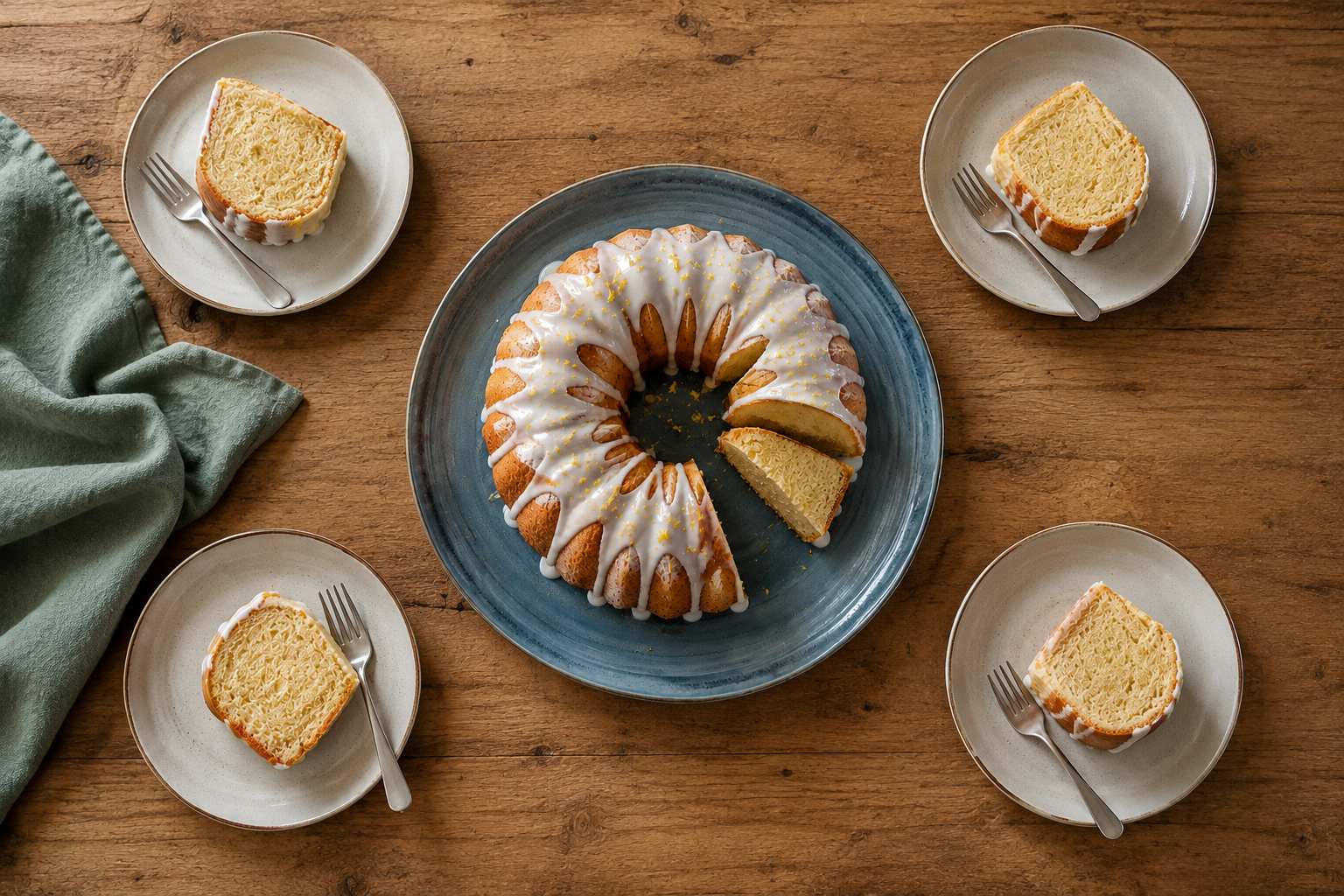
There is something especially cheerful about a lemon cake. Its bright, fresh flavor feels just right at the end of summer, when we still want our baking to feel light, but the idea of turning on the oven is beginning to sound comforting again.
This lemon Bundt cake is the kind of recipe I love to bring to the table: simple enough for an afternoon at home, yet beautiful enough for a brunch, a birthday or a small family gathering. The Bundt pan does most of the decorating for us, and a generous lemon glaze settles into every curve before slowly running down the sides.
The cake itself is soft, moist and full of real lemon flavor. Fresh juice and zest bring plenty of brightness, while lemon Greek yogurt gives the crumb a lovely tenderness and a little extra richness. It is delicious with a cup of tea or coffee, and even better when shared around the table.
What’s Special About This Lemon Bundt Cake
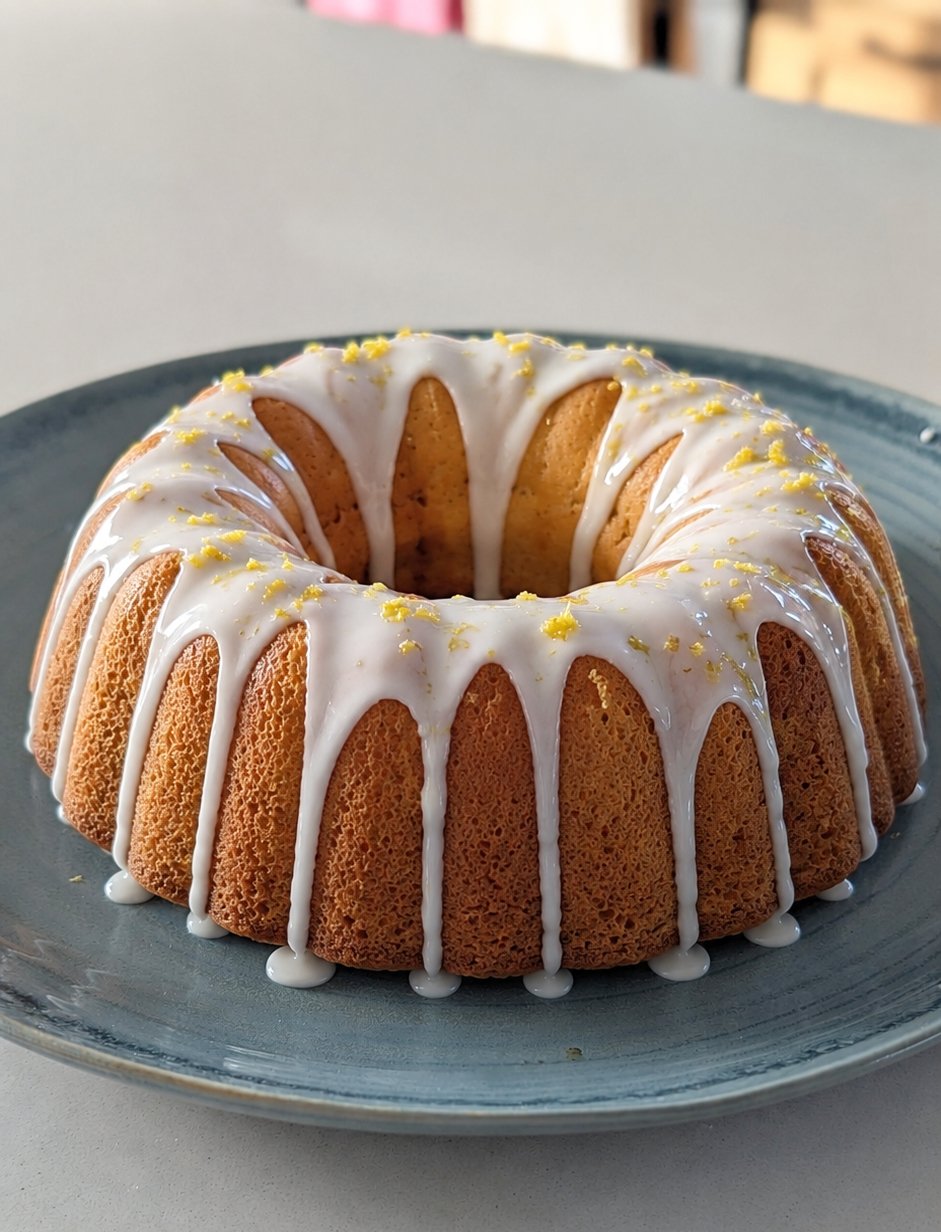
Fresh Lemon Bundt Cake with Lemon Glaze
Equipment
- 10-cup (2.5-litre) Bundt or tube pan
- Two mixing bowls
- Electric hand mixer or stand mixer
- Measuring cups and spoons
- Fine grater or microplane
- Citrus juicer
- Rubber spatula
Ingredients
For the Lemon Cake
- 2¼ cup unbleached all-purpose flour
- 1 tbsp baking powder
- 1 tbsp baking soda
- ¼ tsp salt
- 165 g unsalted butter softened
- 1 cup granulated sugar
- Finely grated zest of 2 lemons
- 3 large eggs ideally at room temperature
- ½ cup freshly squeezed lemon juice
- ¾ cup lemon Greek yogurt ideally at room temperature
For the Lemon Glaze
- 1 cup icing sugar sifted
- 1 to 2 tbsp freshly squeezed lemon juice as needed
- Finely grated zest of 1 lemon for decorating
Instructions
Make the Lemon Cake
- Place a rack in the centre of the oven and preheat it to 350°F (180°C). Generously brush every curve and crevice of a 10-cup Bundt pan with softened butter, then dust it with flour. Tap out the excess.
- In a medium bowl, whisk together the flour, baking powder, baking soda and salt. Set aside.
- In a large bowl, beat the softened butter, sugar and lemon zest with an electric mixer until pale, light and fluffy, about 3 to 4 minutes. Rubbing the zest into the sugar as you mix helps release its fragrant oils.
- Add the eggs one at a time, beating well after each addition and scraping down the sides of the bowl as needed. Continue mixing until the batter is smooth and evenly combined.
- With the mixer on low speed, add the dry ingredients in three additions, alternating with the lemon juice and Greek yogurt. Begin and end with the dry ingredients. Mix only until the last streaks of flour disappear; avoid overmixing.
- Spoon the batter evenly into the prepared pan and smooth the top with a spatula. Gently tap the pan once or twice on the counter to settle the batter into the details of the mould.
- Bake for about 45 minutes, or until the cake is golden and a toothpick inserted into the thickest part comes out clean or with only a few moist crumbs attached.
- Let the cake cool in the pan for 15 to 20 minutes. Carefully loosen the edges if necessary, place a wire rack over the pan and invert the cake. Lift away the pan and allow the cake to cool completely before glazing.
Make the Lemon Glaze
- Place the sifted icing sugar in a small bowl. Add 1 tablespoon of lemon juice and whisk until smooth.
- Add more lemon juice a few drops at a time until the glaze is thick but pourable. It should fall slowly from the spoon and hold briefly on the cake before running down the sides.
- Set the cooled cake and its wire rack over a baking sheet or large plate. Spoon the glaze over the top, allowing it to follow the natural curves of the cake.
- Finish with fresh lemon zest. Let the glaze set for 15 to 20 minutes before slicing.
Notes
Tips for a Beautiful Bundt Cake
Prepare the Pan Carefully
Bundt pans have plenty of small curves where cake can stick. Use softened butter and a pastry brush to coat the entire interior, including the centre tube, then add a light, even dusting of flour. Prepare the pan just before adding the batter so the coating does not slide down the sides.Use Room-Temperature Ingredients
Room-temperature butter, eggs and yogurt combine more evenly and help create a finer, softer crumb. If you remember, take them out of the refrigerator about 30 minutes before baking.Do Not Overmix the Batter
Once the flour is added, mix only until everything is combined. Too much mixing can make the finished cake firmer and less tender.Let It Rest Before Turning It Out
If you unmould the cake immediately, it may be too delicate and break. If it cools completely in the pan, it may begin to stick. A rest of about 15 to 20 minutes is the sweet spot.Glaze Only When Completely Cool
A warm cake will absorb the glaze or cause it to run off. Waiting until the cake is fully cooled gives you the prettiest white drips.Substitutions and Variations
- If you cannot find lemon Greek yogurt: Use plain Greek yogurt and add an extra teaspoon of finely grated lemon zest to the batter.
- For a softer citrus flavor: Replace up to half of the lemon juice in the cake with milk.
- For a lemon-poppy seed Bundt cake: Fold 2 tablespoons of poppy seeds into the finished batter.
- For a little extra decoration: Add a few thin strips of lemon zest, edible flowers or a light dusting of icing sugar once the glaze has set.
- For a sweeter finish: Make one and a half times the glaze recipe for a thicker, more generous coating.
How to Store It
Keep the cake covered at room temperature for up to 2 days. For longer storage, refrigerate it in an airtight container for up to 5 days and let individual slices return to room temperature before serving.
The unglazed cake can also be frozen. Wrap it tightly in plastic wrap and place it in a freezer-safe bag or container for up to 2 months. Thaw it overnight in the refrigerator, then bring it to room temperature and add the glaze before serving.
Serving Suggestions
This cake is lovely on its own, but you can also serve it with fresh berries, a spoonful of lightly whipped cream or a little plain Greek yogurt. For a simple afternoon treat, all it really needs is a pot of tea or a freshly made coffee.
A Small Note Before You Begin
Fresh lemon juice makes a real difference here. Since the zest is also an important part of the recipe, finely grate the lemons before squeezing them—it is much easier than trying to zest them afterward. Depending on their size and juiciness, you will likely need 4 to 5 lemons for the cake, glaze and decoration.
Did you make this recipe?
Please let me know how it turned out for you! Leave a comment below and tag @thesmallplenty on Instagram and hashtag it #thesmallplenty.